Climate disasters are not just increasing, they are multiplying. According to global climate and disaster data, climate-related disasters have increased by nearly five times since the 1970s. In the last 20 years alone, floods, storms, heatwaves, and wildfires have increased by more than 80% worldwide. Flood-related disasters have doubled over the past three decades. Today, over 90% of all disasters are linked to weather and climate, and every year, climate disasters affect more than 300 million people across the world.
What is most worrying is that low-income and vulnerable communities are hit the hardest, even though they contribute the least to climate change. Families with weak housing, unstable incomes, and limited access to basic services face the biggest losses again and again.
This is why what happens in Tamil Nadu, a coastal state in southern India, matters far beyond India. Tamil Nadu is India’s second-richest state after Maharashtra and one of the fastest-growing economies in the country. It is a major hub for manufacturing, technology, agriculture, and exports, and plays a critical role in India’s overall growth. At the same time, its long coastline and dense population make it highly vulnerable to cyclones, flooding, and climate shocks.
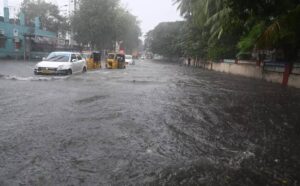
The flooding caused by Cyclone Fengal in 2024 and Cyclone Ditwah in 2025 reflects the same global pattern that brings hurricanes to the United States, wildfires to Europe, floods to Africa, and droughts to South America showing how even economically strong regions are not immune to climate risk.
In late 2024, Cyclone Fengal made landfall along the Tamil Nadu coast, bringing intense rainfall, flooding, and strong winds across several districts. While the cyclone weakened after landfall, the volume of rain and prolonged waterlogging caused severe damage to homes, crops, livelihoods, and basic infrastructure.
Just a few weeks later, in 2025, Cyclone Ditwah hit the region with similar intensity and impact. For communities that were still recovering from the damage caused by Cyclone Fengal, this second cyclone came as another shock. Many families had not yet rebuilt their homes or stabilized their incomes when they were hit again by floods and strong winds.
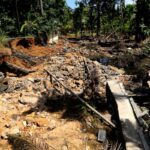
The districts of Chengalpattu, Cuddalore, and Thiruvallur were among the worst affected. Low-lying villages, informal settlements, and flood-prone agricultural regions were most impacted, forcing thousands of families to move into temporary relief camps. For communities already living with economic strain, the cyclone was not just a weather event it became a humanitarian and livelihood crisis. Water entered homes. Roads disappeared. Crops were ruined. Daily work stopped completely. Many families lost everything they depended on food supplies, clothing, household items, and income. Schools and health services were also disrupted.
What Help Looked Like on the Ground
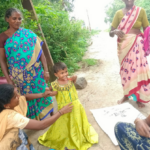
After the cyclone, Goonj supported families through Rahat (relief) kits. These kits were made using materials collected from homes and offices across India. Each kit included: Dry food supplies, Clothing, Basic hygiene items, Floor mats and household essentials. These items may seem basic, but they matter deeply when families are sleeping on cold floors, cooking in shared spaces, and trying to return to daily routines.
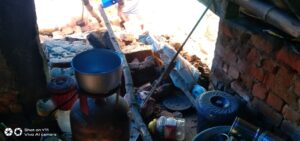
These simple relief work helped families manage daily life during the hardest days.In total, more than 4,200 households across 80+ communities received support.
One woman from Cuddalore shared:
“The floor mat helped us sleep. The floor was very cold. We are still using it.”
It’s a small detail. But in a crisis, small things matter.
From Emergency Help to Community Recovery
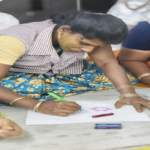
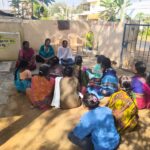
Relief is important. But recovery takes time. Through Goonj’s Cloth for Work program, which focuses on communities participation, people worked together to improve their villages instead of waiting for outside help. In two villages in Chengalpattu district people came together to clean and rebuild water canals for farming and daily use, Plant trees to improve the local environment and Cleaned public spaces and improve sanitation
These activities helped improve health, water access, and living conditions. More importantly, people felt ownership of the work. They were not just receiving help. They were rebuilding their own future.
A Family’s Story from Cuddalore
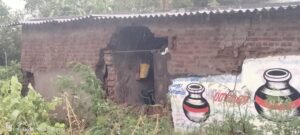
In Pallipadai village, flooding affected nearly 3,000 families. More than 75 homes were completely destroyed. One family was a single mother with three young children. They live in a small rented room. Floodwater entered their home. Their income stopped during the rainy season. With support from Altius, Goonj distributed 94 relief kits in the village. The kit gave the family food, clothes, and basic supplies. It did not fix everything. But it gave them safety, comfort, and time to recover.
Why Long-Term Support Matters
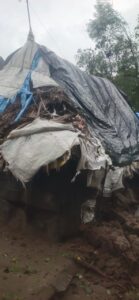
Cyclone Fengal exposed a deeper issue. Many families in flood-prone areas face the same risks year after year. Homes are fragile. Income is unstable. Climate events push families further into poverty each time.
Short term relief helps people survive. But long term recovery is need of an hour which requires strong housing, stable livelihood options, clean water and sanitation, and local system that prepare communities for future disasters and this kind of recovery takes time, trust, and partnership.
Why This Story Matters Globally
Climate disasters are increasing across the world from floods and hurricanes to wildfires and droughts. Communities with the fewest resources often suffers the most. What happens in villages in tamil nadu is connected to global climate challenges.
In 2025 alone:
The United States has already seen dozens of billion-dollar weather disasters, including wildfires, storms, and floods that together cost more than $100 billion in the first half of the year. This included 14 major climate events that each caused serious damage and loss. Europe has faced massive wildfires and heavy flooding, with hundreds of thousands of acres burned and evacuation orders in place. In Asia, massive floods in Indonesia’s Sumatra region displaced more than 1 million people and affected over 3 million. In South Korea, summer flooding led to the evacuation of over 18,000 people.
By Ankit Vardani
Goonj Setu Fellow