Research in psychology shows that clothing does more than just cover our bodies. What we wear can change how we feel, how we think, and how we behave. This idea is called enclothed cognition. It means that clothing can influence confidence, emotions, and how people see themselves.
A well-known example is the “Batman effect.” In one study, children who wore a Batman costume showed more confidence and persistence while doing tasks. The costume made them feel stronger and more capable, even though nothing else had changed. Similar research shows that uniforms or meaningful clothing can increase feelings of pride, responsibility, and belonging.
These ideas connect closely with the work done by Goonj.
What the Field Teams Observed
To understand how clothing affects people’s lives, interviews were conducted with members of the field implementation team. These team members came from different districts of Tamil Nadu, including Thiruvallur, Kanchipuram, Cuddalore, and Chidambaram.
Through their experiences, it became clear that clothing carries strong emotional and social meaning. It is not just about fabric or utility it is about how people feel when they wear something.
Diwali, Colours, and Confidence
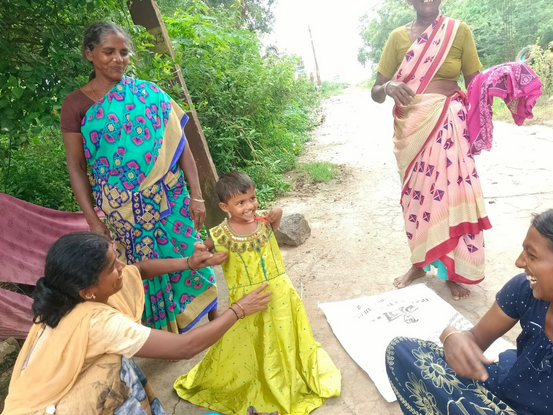
One team member shared an experience from Thiruvallur district during Diwali. Families received clothing kits, and the response was immediate and emotional. People smiled, expressed gratitude, and celebrated.
In some villages, people said they rarely owned colourful clothes. When they received clothes in bright colours, their mood changed visibly. They looked happier, more confident, and proud. Team members noticed that people stood differently, smiled more, and carried themselves with confidence. The clothes did not just change how they looked they changed how they felt.
When Dignity Matters More Than Need
The field team also noticed that people responded differently to clothing in different villages.
One team member, Lichu, shared an experience from a village in Kanchipuram. There, some people were hesitant to accept used clothing. They questioned why they were being given old clothes. For them, accepting such clothing felt like being looked down upon, so they chose not to take it.
In contrast, another village accepted the same clothing with openness. People there were cheerful and appreciative. This showed that acceptance of clothing depends not only on need, but also on how the help is offered and how people feel about themselves.
Children, Clothes, and Joy
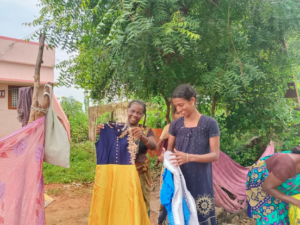
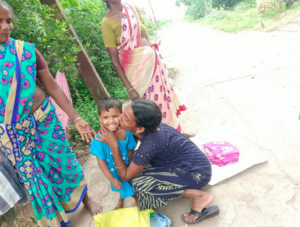
There were also touching stories about children. In some villages, the clothes given to children were oversized. Even so, mothers expressed happiness. The clothes were colourful and new to their children’s experience.
Seeing their children wear bright clothes made parents feel proud and joyful. The size did not matter as much as the feeling the clothes brought. These moments showed that clothing can affect not just individuals, but entire families.
More Than Material Support
These field experiences clearly show that clothing has a powerful effect on emotions, confidence, and self-worth. The impact of clothing is shaped by social context, perception not just material need.
When clothing is shared with respect, it can restore confidence, create joy, and strengthen a sense of belonging. It reminds us that what people wear can shape how they feel about themselves and that feeling is just as important as survival.
By Ankit Vardani
Goonj Setu Fellow